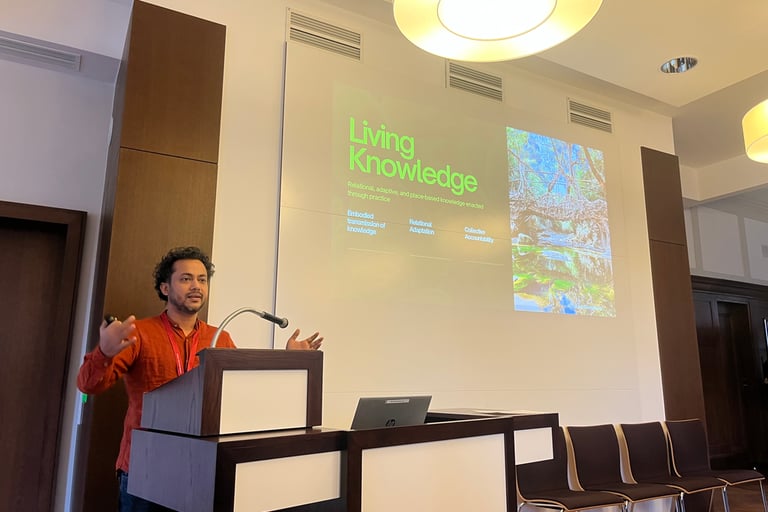
Living Knowledge
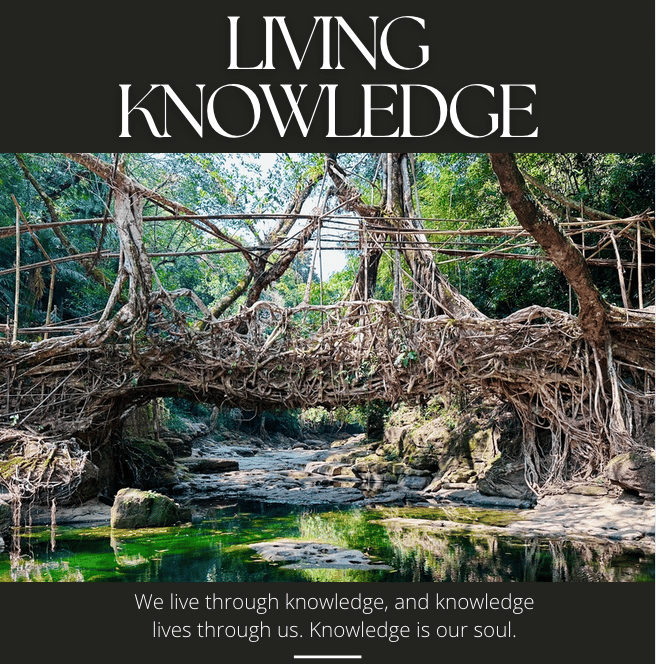
Living Knowledge is a theoretical framework for understanding how Indigenous and other communities maintain adaptive, embodied, and relational systems of knowing in the face of rigid, technocratic and static governance frameworks. It helps us ensure knowledge transmitted for millennia through oral histories, preserving Indigenous relational ontology, adaptations and negotiations to maintain human-nature kinship. Abdullah Rubaet Chowdhury is operationalising this framework in the era of technological appropriation (including Artificial Intelligence), and pressure to fossilise knowledge into static, archived forms, to retain epistemological sovereignty. It emerges primarily from his entangled history in the subcontinent, and ethnographic encounters with Indigenous communities such as the Khasi, Garo and other communities in Bangladesh, India and Nepal. It addresses the question: How do we archive living knowledge without fossilising it in archives?
Relational Adaptations
Knowledge evolves in response to changing ecological and social contexts. It is inseparable from the relationships and places that generate it. The capacity to remain true to relational principles while adapting to new constraints.
Collectively validated
Legitimacy comes from shared experience, ritual, memory, and community witness. No external validation, textual authority, legal frameworks necessary.
Embodied Transmissions
Knowledge transmitted through bodies, myths, stories and relations.
Multiple valid ways of knowing can coexist, negotiated through lived encounters. Multiple knowledge and reality can coexist without subordinating one another.
Plural